India is one of those places that gets under your skin. Not just for its colors and chaos, but for what lives in its forests, grasslands, and high-altitude passes. Tigers ghosting through bamboo. Elephants wading into still water at dusk. A snow leopard, barely visible, crossing a frozen ridge in Ladakh.
If you have a camera and a love for wild things, India is waiting for you.
Wildlife photography tours in India have grown into a serious pursuit for photographers from across the world. And for good reason. Nowhere else can you move from tiger country to elephant corridors to Himalayan wilderness within the same journey.
This guide walks you through eight of India’s finest destinations for wildlife photography. Let’s dive in!
1. Jim Corbett National Park, Uttarakhand
India’s oldest national park carries a special weight. The Ramganga River winds through sal forests and grasslands, creating layered, dramatic backdrops that feel almost cinematic. Jim Corbett is not just about tigers. It is about mood, light, and landscape working together.
Subjects to Capture:
Tigers and elephants are the headliners, but leopards, gharial crocodiles, and over 600 bird species make Corbett a remarkably full frame. The grasslands of Dhikala catch the early morning mist in a way that makes every shot feel like a painting.
Unique Experiences:
Elephant-back safaris in certain buffer zones give you a completely different vantage point. You move quietly, at animal height, through grassland that a jeep simply cannot access.
The Ramganga Reservoir inside the park is another photographic highlight. Early morning boat rides here place you at water level with fishing eagles, herons, and gharials in a single frame. Wildlife and nature photography tours in India rarely offer this kind of multi-habitat access within one park boundary.
Best Time to Visit:
November to June. The dry months from March onwards bring animals closer to water, improving sightings significantly.
2. Kanha National Park, Madhya Pradesh
Kanha is the kind of place that makes you forget what hour it is. The dense sal forests shift from dark green to gold depending on the season. The park was one of the inspirations behind Rudyard Kipling’s The Jungle Book, and you will understand why the moment you step in.
This is one of the most rewarding destinations on any wildlife photography tour in India.
Subjects to Capture:
Tigers are the star, but the real photographic gem is the rare barasingha (swamp deer), which exists in healthy numbers here and nowhere else. The open meadows called maidans offer clean sight lines, making it easier to compose shots without trees cutting across the frame.
Unique Experiences:
Imagine a tiger stepping out of the sal forest at first light, an amber coat catching the sun, then freezing for a second before moving on. Kanha offers this. Regularly. Wildlife and nature photography tours in India based in Kanha are built around these golden-hour moments in the maidans.
Best Time to Visit:
October to June, with February to May offering the clearest visibility and most active tiger movement.
3. Bandhavgarh National Park, Madhya Pradesh
Bandhavgarh has the highest density of tigers of any reserve in India. Combine that with its dramatic landscape, which includes ancient ruins, elevated terrain, and mixed forest, and you have a photographer’s dream. This is where you go when you want to almost guarantee a tiger encounter.
Custom Tours India’s expert naturalists know Bandhavgarh intimately. Our guided routes target the best zones at the right hours, helping you make a good shot a great one.
Subjects to Capture:
Tigers, leopards, sloth bears, and vultures. The ruins of Bandhavgarh Fort in the background of a tiger shot create images unlike anything else in India.
Unique Experiences:
Sunrise safaris here are legendary. The light hits the elevated terrain and the ruins in a way that feels almost theatrical. Wildlife photography tour operators in India who specialize in big cat photography rate Bandhavgarh as a must.
Best Time to Visit:
November to June. April and May are the peak for tiger sightings as the forest thins out and animals visit waterholes.
4. Pench National Park, Madhya Pradesh
Pench is quieter and more relaxed than its famous neighbours, but that is part of its appeal. The park straddles the Madhya Pradesh and Maharashtra border, and its teak forests, open glades, and the Pench River create a rich and varied photographic environment.
This is the landscape that inspired Kipling to write Mowgli’s Jungle. Wander through it at dawn and you will feel exactly why.
Subjects to Capture:
Leopards are frequently spotted here and often more relaxed than in busier parks. Wild dogs (dholes) move in packs through the open areas. Indian gaur, spotted deer, and a rich birdlife complete the picture.
Unique Experiences:
Pench is often overlooked despite being one of the top wildlife sanctuaries and national parks of India for wildlife photography. The absence of tourist pressure means animals are calmer, which translates directly into better, more natural photographs.
Best Time to Visit:
October to May. March and April are ideal for clear sightings before the monsoon.
# A Note on Responsible Photography:
All good wildlife photography starts with respect. Stay in the vehicle when required. Never pressure your guide to approach too close. The animals are not performers. Conservation and photography are not opposites. The best wildlife photography tours in India are built on this principle, and we design every itinerary with the health of the ecosystem in mind. Now next we have:
5. Tadoba Andhari Tiger Reserve, Maharashtra
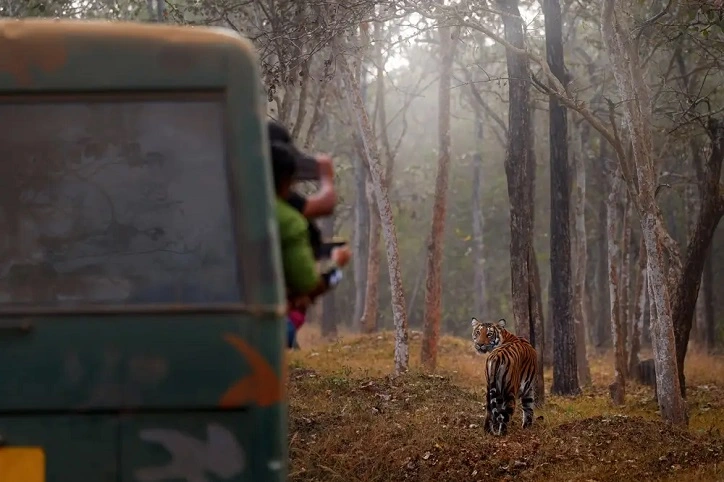
Tadoba is Maharashtra’s oldest and largest national park, and it has quietly become one of the most talked-about destinations on any wildlife photography tour in India. The landscape is more open than Kanha or Bandhavgarh, which means tigers are visible at greater distances and for longer stretches of time.
Subjects to Capture:
Tigers in open terrain are Tadoba’s signature offering. The reserve’s lakes and waterholes attract animals throughout the day, especially in summer. Sloth bears, leopards, Indian wild dogs, and a variety of raptors round out the frame.
Unique Experiences:
Tadoba is one of the few reserves in India where tigers are regularly seen walking in full daylight on open tracks. Wildlife photography tour packages in India that include Tadoba often highlight this as a key differentiator. Close-range, open-terrain tiger photography is rare in Asia. Here, it is almost expected.
Best Time to Visit:
March to June. Summer brings animals to water regularly, and the reduced vegetation means exceptional visibility.
Choose midday shooting in Tadoba during summer, as tigers visit waterholes between 10 AM and 2 PM.
6. Nagarhole National Park and Kabini, Karnataka
Nagarhole and the Kabini reservoir sit side by side in Karnataka’s lush Western Ghats region, and together they offer something no other destination in India quite matches. The water. The elephants. The light.
At dusk, large herds of elephants wade into the Kabini River. The reflections on the water, the soft orange sky, the sheer scale of the scene. It is one of the most photographed wildlife moments in all of Asia, and rightly so.
Subjects to Capture:
Elephants at the riverbank are the iconic shot, but Nagarhole also has high leopard density and excellent gaur, wild dog, and sambar populations. The water-edge environment creates compositions that feel closer to East Africa than India.
Unique Experiences:
Boat safaris on the Kabini reservoir are unique among Indian wildlife experiences. Floating quietly past submerged trees with elephants on the bank and painted storks overhead is something a land safari simply cannot replicate. For many photographers, a Kabini boat safari is the standout experience on wildlife and nature photography tours in India. It consistently earns some of the highest praise from visitors.
Best Time to Visit:
October to May. The dry season from February to May concentrates wildlife at the reservoir’s edge, making sightings more predictable.
7. Satpura National Park, Madhya Pradesh
Satpura is different. While most Indian reserves are experienced from a jeep, Satpura allows walking safaris, boat safaris on the Denwa River, and even cycling through buffer zones. That difference in perspective changes everything about how you photograph wildlife.
Getting low, moving slowly on foot, framing through grass rather than from a vehicle roof. Satpura rewards photographers who like to think creatively about angles.
Subjects to Capture:
Sloth bears are the star, and Satpura offers some of the best sloth bear photography in India. Leopards, tigers, Indian giant squirrels, mugger crocodiles, and a spectacular range of birds including the Indian skimmer make this park endlessly rich.
Unique Experiences:
A walking safari in Satpura at dawn, with a sloth bear lumbering through the undergrowth 30 meters ahead, is the kind of experience that does not happen in a jeep. Wildlife photography tour operators in India who offer Satpura itineraries consistently highlight this ground-level access as a once-in-a-trip experience.
Night sky photography from the forest camps here is also exceptional. Light pollution is minimal, and the canopy opens up enough to capture a proper Milky Way frame.
Best Time to Visit:
November to May. February and March are ideal, with cooler temperatures making walking safaris more comfortable and animals more active.
8. Hemis National Park, Ladakh
Hemis is not for everyone. The altitude, the cold, the remoteness. But for wildlife photographers willing to make the journey, it offers something that no other park in India can: the snow leopard.
Hemis sits in the Trans-Himalayan zone of Ladakh, a high-altitude desert where rocky ridges, frozen streams, and sparse vegetation create a landscape that looks like another planet. The snow leopard, one of the most elusive cats on earth, hunts blue sheep across these ridges in winter.
This is the crown jewel of wildlife photography tours in India.
Subjects to Capture:
Snow leopards are the primary draw, but Hemis also offers Tibetan wolves, red foxes, Himalayan ibex, Eurasian lynx, and golden eagles. The landscape itself is a photograph. Stone stupas against white peaks, frozen river valleys, and the stark beauty of the high desert.
Unique Experiences:
Tracking snow leopards on foot with experienced local guides across Hemis’s ridgelines is one of the most intense and rewarding photography experiences on the planet. Guided photography tours in India rarely get more specialized or more memorable than a snow leopard expedition in Hemis.
Best Time to Visit:
January to March. This is when snow leopards descend to lower altitudes following blue sheep herds, making sightings far more likely.
Note: Cold temperatures affect battery performance significantly. Carry at least three fully charged batteries and keep spares close to your body for warmth. Use a monopod rather than a tripod on uneven rocky terrain.
What You Should Pack for a Wildlife Photography Tour in India
- Camera and Lenses
A telephoto lens in the 400 to 600mm range is essential for big cats and birds. It is a staple of most wildlife photography tour packages in India. Pair it with a 70 to 200 mm lens for mid-range action and a wide-angle lens for landscapes. A crop sensor body gives you extra reach on long lenses. Bring two camera bodies so you are never caught changing lenses during a sighting.
- Support and Accessories
A beanbag is more useful than a tripod in most Indian safari vehicles. For boat safaris, a flexible tripod or a clamp mount works well. Carry a good-quality remote shutter release, extra SD cards, and a rugged waterproof bag for dusty jungle tracks and monsoon-edge conditions.
- Clothing and Protection
Neutral, earthy tones are ideal. Avoid bright colours and white, which can startle animals and draw attention from insects. In Ladakh, thermal layers and windproof outerwear are non-negotiable. For central India’s summer parks, lightweight, breathable fabric is key. A buff or scarf doubles as dust protection and camera insulation on cold mornings.
Final Thoughts
India’s wildlife is vast, varied, and deeply rewarding. But great wildlife photography tours in India depend on more than luck. Choosing the right zones, camps, and timings makes all the difference.
That is exactly what Custom Tours India does. As the Best Bespoke Cultural & Heritage Tour Operator in India, we build itineraries around your specific goals as a photographer.
Some photographers pair a wildlife expedition with a luxury Golden Triangle Tour India extension, moving from Delhi’s history to Rajasthan’s forts and then into the jungle. We make those transitions seamless.
India’s wild places are extraordinary. The question is not whether to go. It is how soon you can make it happen.
Visit Custom Tours India to start planning your wildlife photography journey today.