
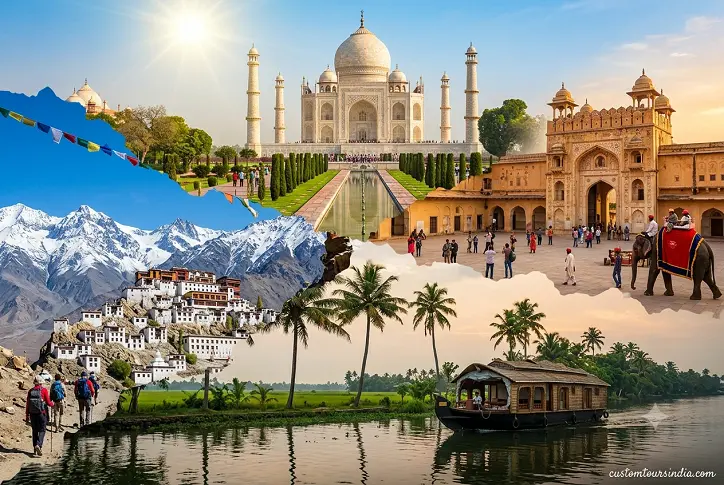
Picture two travelers landing in India on the same day in May. One heads north and spends the week trekking under clear Himalayan skies. The other flies into Delhi and steps out into 44-degree heat that empties the streets by noon. Same country, same date, two completely different trips, and only one of them planned around the season.
This is why the best time to visit India resists a simple answer. The best time of year to visit India is broadly October to March, when the plains are dry and comfortable, but that window moves depending on whether you are after tigers, festivals, mountain passes, or quiet beaches.
Below, we break it down by interest first, then by region, so you can line up your trip with the weather that fits it.
Best Time to Visit India by Travel Interest
The best time to visit India depends on your interests, not the calendar. Match the season to what you want to see, and the timing falls into place. Here is where to start.
- Heritage, forts, and palaces: November to February. Cool, dry days make long hours on your feet around Jaipur’s forts or Delhi’s monuments a pleasure rather than a punishment.
- Tiger safaris and wildlife: April to June. The heat thins the vegetation and pushes animals toward waterholes, so sightings at Ranthambore, Kanha, and Bandhavgarh peak just as the weather turns uncomfortable for everything else.
- Festivals: October and November for Diwali and the Pushkar Camel Fair, March for Holi. These dates move each year with the lunar calendar, so confirm before you book flights.
- Beaches: November to February along the west coast, when the sea calms and the humidity drops.
- Himalayan trekking: June to September, the one stretch when high passes into Ladakh and Spiti are open and the rest of the country is under monsoon.
- Backwaters and wellness: October to March in Kerala, though the monsoon months draw travelers specifically for Ayurvedic treatments.
- Food and city life: the winter months, when street-food season is in full swing and evening markets stay busy well past dark.
If your interests pull in different directions, this is exactly where planning pays off.
We build customized tours in India around the calendar, so a wildlife-and-heritage trip lands in the shoulder weeks where both hold up. In practice, the best time to visit in India is whichever window serves the experience you care about most.

A Quick Look at India’s Seasons
India runs on three broad seasons rather than four, and understanding them saves a lot of second-guessing.
Once you know how they behave, the regional timing below makes far more sense.
- Winter (October to March): The peak travel season. Dry, sunny days across most of the country, cool nights in the north, and the most comfortable conditions for sightseeing.
- Summer (April to June): Hot and dry, with temperatures climbing past 45°C in the plains. Brutal for cities, but the hill stations and mountains come into their own.
- Monsoon (June to September): Heavy rain across most regions, lush green landscapes, lower prices, and thinner crowds. Ladakh stays dry and becomes the trekking capital of the country.
One of the most useful India travel tips is to stop thinking of the country as a single climate.
The best time of the year to visit India for the mountains is the worst time for the plains, and planning around that contrast is what separates a smooth trip from a sweaty one.
Best Time to Visit North India
The best time to visit North India is October to March, and this is the region most first-time visitors build their trip around. It holds the Golden Triangle, the desert forts of Rajasthan, the ghats of Varanasi, and the gateway to the Himalayas, so the timing here shapes most itineraries. If you are weighing the best time to visit Northern India as a whole, aim for the cool, dry heart of winter and adjust from there.
Best Time to Visit Delhi and the Golden Triangle
The best time to visit Delhi India is between October and March, with November and February standing out for clear skies and manageable temperatures. December and January bring cold mornings and occasional fog that can delay flights and trains, so build in a little buffer.
The best time to visit the India Golden Triangle route, linking Delhi, Agra, and Jaipur, follows the same logic. The winter months keep the long drives and walking tours comfortable.
Because the circuit involves a fair amount of time outdoors, the best time of year to visit India Golden Triangle is firmly in the cooler half of the calendar, before the March heat sets in.
Best Time to Visit the Taj Mahal, Jaipur, and Rajasthan
The best time to visit India’s Taj Mahal is from November to February, when the marble glows in soft winter light and the afternoons stay mild. Go at sunrise regardless of season, both for the light and to beat the crowds, and remember it closes on Fridays.
The best time of year to visit Taj Mahal India lines up neatly with the wider Golden Triangle window, which is why most travelers see it as part of that loop.
The best time to visit Jaipur India is also November to February, ideal for climbing up to Amber Fort and wandering the old city without wilting. The best time to visit Rajasthan, India, as a whole runs November to March, covering Jodhpur, Udaipur, and the Thar Desert, with the Pushkar Camel Fair adding a reason to come in early November.
Best Time to Visit Varanasi
The best time to visit Varanasi India is November to February, when cool, dry mornings make the sunrise boat rides along the Ganges especially atmospheric.
Summer here is punishing, with temperatures well into the 40s, and the monsoon can raise the river enough to disrupt the ghats. Winter fog occasionally rolls in, but a still, misty dawn on the water is part of the city’s character rather than a drawback.
Visit:- Golden Triangle Tour with Varanasi
Best Time to Visit Mumbai
The best time to visit Mumbai India is November to February, the stretch when the coastal humidity finally eases and evenings by the sea turn pleasant. The city sits on the west coast, so its monsoon is dramatic: from June to September the rain arrives in sheets, floods low-lying streets, and reshapes daily life around the downpour. Some travelers love that intensity, but for sightseeing, the dry winter months are far easier.
March through May stays hot and sticky rather than scorching, since the ocean moderates the extremes. If you are combining Mumbai with the Ellora and Ajanta caves inland, the same winter window works well for both.
Best Time to Visit South India
The best time to visit South India is November to March, when the heat is tempered and the coastal air stays clear. The south never gets as cold as the north, so even peak winter is warm, which makes it a reliable choice when the plains up north turn foggy.
If you are wondering about the best time to visit Southern India specifically for Kerala’s backwaters and hill stations, this same window delivers calm waters and green, comfortable tea country.
Goa runs on its own rhythm as the country’s beach capital. The Goa India best time to visit is December to February, when the sea is calm, the humidity drops, and the beach shacks are in full swing. The best time of year to visit Goa India avoids the June-to-September monsoon, when most water sports shut down, though the off-season brings dramatic green scenery and much lower room rates if you do not mind the rain.
Best Time to Visit Central and East India
The best time to visit Central India is November to February, a dry, cool stretch that suits the region’s forts, temples, and, above all, its tiger reserves. Central India holds Madhya Pradesh’s great national parks, and while winter is most comfortable for general travel, serious wildlife photographers often return in the April-to-June heat when sightings peak.
The best time to visit East India is from September or October through March, once the monsoon has passed and the region turns lush. This covers West Bengal, Kolkata, and the temples of Odisha, and the same window applies if you are planning the best time to visit eastern India more broadly.
The best time to visit North East India is October to April, when the hills of Assam, Meghalaya, and Arunachal Pradesh are dry, and the views open up. The best time to visit Northeast India also depends on permits, since several states require an Inner Line Permit that takes a few days to arrange, so factor that into your planning.

Practical Tips for Planning Your India Trip
A little planning goes a long way in India, especially in peak season. Getting these details right is part of choosing the best time to visit India, since timing and logistics work together.
- Book early for winter travel. From November through February, the best hotels and popular trains fill up months ahead, particularly around Christmas and New Year.
- Sort permits in advance. Ladakh, the Northeast, and parts of the Himalayas need permits that take time to process.
- Pack for range. Winter mornings in the north can be near freezing while afternoons stay warm, so layers matter, along with sturdy, broken-in shoes for uneven fort steps and ghats.
- Plan your ground transport. Distances look short on a map and take far longer on the road, so it often makes sense to hire a car & driver in India rather than self-drive or rely on connections between cities.
Getting the season right is half the work; getting the logistics right is the other half, and the two together decide whether you spend your trip exploring or troubleshooting.
Final Thoughts
The best time of the year to visit India ultimately depends on the trip you want, and that is where a bit of local knowledge earns its keep. Lining up wildlife season with festival dates, or a Himalayan trek with a Golden Triangle add-on, takes some calendar juggling that’s hard to get right from a distance.
At Custom Tours India, we plan trips around your interests and the seasons that serve them best, handling the timing, routing, and logistics so you can focus on the country itself.
Tell us what you want to see, and we will tell you exactly when to come and how to make the most of it.
Frequently Asked Questions
1. When is the best time to visit India?
For most travelers, the best time to visit India is October to March, when the majority of the country is dry, sunny, and comfortable for sightseeing. February, March, and November tend to be the sweet-spot months, offering good weather without the deepest winter fog or the peak-holiday crowds.
2. What are the best places to visit in India for first time visitors?
The best places to visit in India for first time travelers usually start with the Golden Triangle of Delhi, Agra, and Jaipur, which packs iconic monuments, forts, and markets into a manageable loop. From there, many add Rajasthan for desert palaces, Varanasi for the Ganges, or Kerala for a relaxed contrast of backwaters and beaches.
3. Which month is the hottest in India?
May is typically the hottest month, with much of the northern and central plains pushing past 45°C. It is a hard time for city sightseeing, though for wildlife it can be the best time to visit in India, since the heat concentrates animals around water.
4. When is the cheapest time to visit India?
The monsoon months from June to September bring the lowest prices and the thinnest crowds, and if you focus on drier regions like Rajasthan and Ladakh, you can travel well while everyone else stays home.
5. What is the shoulder season in India?
The shoulder months of September, early October, and April sit between peak and off-season. It offers thinner crowds and lower prices while the weather still holds. September brings fresh, green landscapes after the rains, and April suits wildlife before the worst heat arrives. For flexible travelers, these weeks are often the sweet spot.
6. How long should you spend in India?
For a first visit, ten days to two weeks covers a focused region without rushing, such as the Golden Triangle plus Rajasthan, or the south on its own. Trying to see north and south in one short trip means long transfers that eat into your days. Slower is almost always better here.