Two couples can book the same week in Rajasthan, stay in the same hotels, and come home having had completely different holidays. One spent an hour in the midday queue at Amber Fort and saw the Sheesh Mahal over a hundred shoulders. The other went up at the opening, had ten quiet minutes inside it, and was back at the pool by noon.
Nothing separated them except planning. Most of luxury travel India comes down to access and timing rather than thread count.
This guide covers the places worth your days, the hotels that earn their rates, how long to give each stop, and what to sort out before you fly.
What Luxury Travel in India Includes?
India has four kinds of hotels at the top end. Palace hotels such as Rambagh Palace in Jaipur and Umaid Bhawan Palace in Jodhpur are former royal homes, and some are still partly lived in by those families. International five-star hotels such as The Oberoi New Delhi are newer and run to a global standard.
Tented camps stand at the edges of the national parks, a short drive from the safari gates. Small heritage hotels, including havelis and village forts like Samode Palace and Rawla Narlai, take ten or twelve guests rather than two hundred.
Driving times are longer than they look on a map. Delhi to Agra takes about three hours and Agra to Ranthambore about five, so leave room for them when you plan the days.
Best Places to Visit in India for Luxury Travel
India is too large to see in one trip, so most people try to fit in too much. Choose one main destination to visit in India, add two or three places nearby, and you will enjoy it far more than a tour that stops in eight cities.
The places below are the ones a luxury travel India itinerary is usually built around.
Jaipur: Forts, Markets and Palace Hotels
Start at Amber Fort in the first hour after it opens, while the courtyards are still cool. The rest of the city follows easily: the City Palace, the astronomical instruments at Jantar Mantar, the latticed windows of Hawa Mahal, and Jal Mahal, which stands in the middle of Man Sagar lake.
Most visitors miss the early morning. The flower and vegetable markets are busy before seven; there is singing at Govind Dev Ji temple, and the masala chai afterwards is some of the best in India.
Jaipur is also a good place to try the crafts yourself, at a block printing workshop or with jewellers who still cut stones by hand. Six days across Delhi, Agra and Jaipur is still the best first trip to India, and the Luxury Golden Triangle Tour India covers that route with a stay at The Leela Palace and a heritage haveli in Jaipur.
Udaipur and Jodhpur: Lake Palaces and Fort Cities
Udaipur is built around Lake Pichola, and the City Palace above it needs a slow morning to see properly. Go out on a private boat in the late afternoon, when the light is low and the buildings along the shore turn orange.
Jodhpur is bigger and busier. Mehrangarh stands on a rock above the old city, the marble cenotaph of Jaswant Thada is a short walk past it, and Umaid Bhawan Palace covers twenty-six acres on the ridge opposite. The blue painted lanes below the fort are worth as much time as the fort itself.
Some of the best luxury trips to India continue past both cities into the villages between them. The Luxury Hidden Heritage Tour Of India takes in Rohet, Narlai, Deogarh, Bijaipur and Bundi, with stays in small palaces and forts in towns most itineraries drive straight through.
Agra and Delhi: The Taj Mahal and Mughal Monuments
See the Taj Mahal twice rather than once. Go at sunrise with a guide, when the marble looks pink, then come back at dusk to Mehtab Bagh on the other side of the river, where you see the building as a silhouette and there are far fewer people. Agra Fort is a good use of the middle of the day, and on the drive out you can stop at Fatehpur Sikri and the stepwell at Abhaneri.
Most trips start and end in Delhi, and it deserves more than one night. Humayun’s Tomb was finished before the Taj Mahal and uses many of the same ideas. The Qutub Minar and Jama Masjid are also here.
Ranthambore: Tiger Safaris and Jungle Lodges
Ranthambore is the best looking of India’s tiger parks, because a tenth-century fort stands in the middle of it and the forest has grown over the ruins. Jeep safaris run morning and afternoon with a naturalist, which gives you two chances a day.
The camps on the edge of the park are good places to spend the hours in between. The eight-day Luxury Golden Triangle with Oberoi Hotels includes two nights here at The Oberoi Vanyavilas, which is the simplest way to see tigers on a first trip.
Ladakh: Monasteries, Passes and High-Altitude Lodges
Ladakh is open from May to September, when the passes are clear, and you need a full rest day in Leh before going any higher. The road to Nubra Valley crosses Khardung La, one of the highest motorable passes anywhere, then drops into a cold desert, with double-humped camels on the dunes at Hunder and a hundred-foot Buddha statue at Diskit monastery.
Pangong Tso changes colour during the day as the sun moves across it, and more than half the lake is on the Chinese side of the border. On the way back to Leh you pass Thiksey, which looks so much like the Potala Palace in Lhasa that people call it Little Lhasa.
Ladakh is the part of luxury travel India that looks nothing like the rest of the country. The Magical Leh Ladakh Luxury Tour starts with that rest day in Leh, which matters, because altitude sickness is common at this height.
Kerala: Backwaters, Houseboats and Ayurvedic Retreats
A private kettuvallam houseboat on the Alleppey backwaters comes with a crew and a cook, and it moves at about walking pace. You pass villages, fishermen and a lot of coconut palms, and very little else happens.
Inland, the tea estates at Munnar and the cardamom and pepper plantations around Thekkady fill the days before a wellness programme at an Ayurvedic retreat. Kerala is the part of luxury India travel where the plan is to rest rather than sightsee.
Best Luxury Hotels and Palace Stays in India
Taj Lake Palace stands on its own island in Lake Pichola, and you reach it on the hotel’s boat. The Oberoi Amarvilas was built so that every room faces the Taj Mahal. The Oberoi Rajvilas covers thirty-two acres outside Jaipur.
The smaller places are often the best part of luxury trips to India. Samode Palace an hour from Jaipur, Deogarh Mahal in the Aravalli hills, Rohet Garh with its stables and Ramathra Fort above its lake are all quieter than the big hotels.
Book 60 to 120 days ahead for the October to March season. For the fortnight around Christmas and New Year, allow six months, and expect much higher rates.
How Many Days Do You Need for a Luxury India Trip?
Six to eight days covers Delhi, Agra and Jaipur without rushing. Ten to twelve lets you add Ranthambore for tigers or Udaipur for the lakes. Two weeks is enough for Rajasthan’s smaller heritage towns, or for a leg in the south.
Most luxury India travel packages are suggestions rather than fixed departures. Customized tours in India are normal at this level, so you can add nights in the cities you want and cut the rest.
Getting Around India: Private Cars, Luxury Trains and Flights
A private car with a driver for the whole trip is the best way to see northern India, and it costs far less than the same arrangement in Europe. Travellers who hire car & driver in India get door-to-door transfers, help with luggage, and the option to stop at a stepwell or a roadside chai stall on the way.
The luxury trains are a holiday in themselves rather than transport. The Palace on Wheels runs a fixed seven-night Rajasthan loop out of Delhi between October and April, with 2026-27 deluxe cabin fares from about USD 864 per person per night on double occupancy. The Maharajas’ Express costs more, with three-night and six-night routes from roughly USD 8,400 per person to USD 26,800 for the Presidential Suite.
Fly the long distances, such as Delhi to Leh or Kochi, and use private charters if the schedule is tight. Most luxury travel India itineraries work best if you fly the long sections and drive the shorter ones.
Best Time to Visit India for Luxury Travel
October to March is the main season for Rajasthan, Delhi, Agra and the plains. Skies are clear, mornings are cool, and most of the big festivals fall in these months. Desert nights in December and January are cold, so pack for them.
September gives the best value. The monsoon has cleared, the landscape is green, peak rates have not started, and the light is good. The same itinerary three weeks later can cost noticeably more.
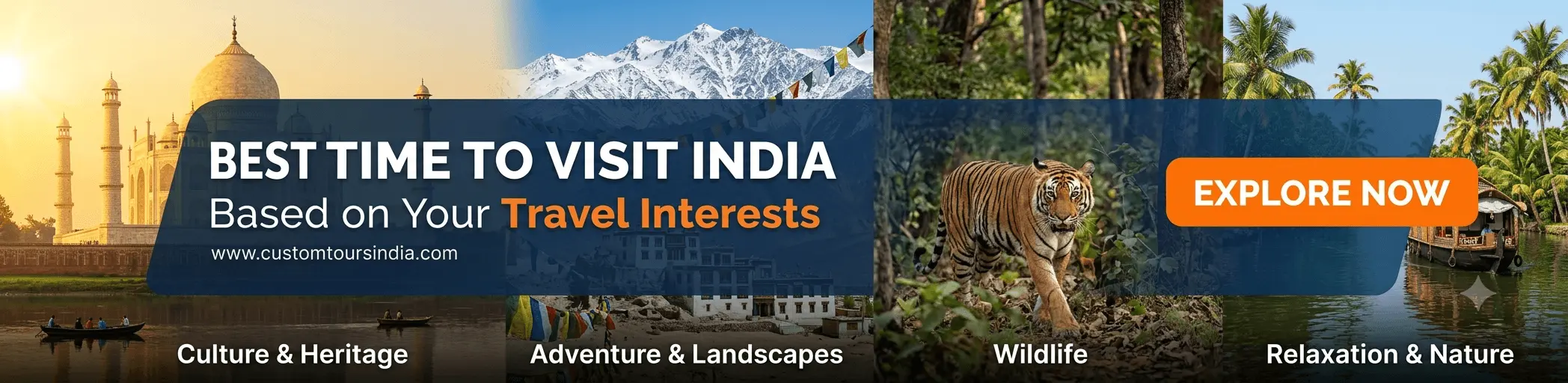
Ladakh and the high Himalaya are the opposite, open from May to September. Kerala is pleasant in winter, but wellness travellers choose its monsoon months deliberately, because Ayurvedic practice treats the rains as the best season for treatment. So for luxury travel India, pick the month to suit the region rather than looking for one best month.
India Travel Tips: Visas, Permits and Tipping
You apply for the e-Tourist Visa online and it usually comes back in three to five business days. It costs USD 25 for the 30-day version between July and March, USD 10 from April to June, and USD 40 for the one-year version.
Ladakh has a requirement that most guides leave out. Foreign nationals need a Protected Area Permit for Nubra Valley, Pangong Tso and Tso Moriri. You cannot apply for it yourself, it has to go through a registered Leh agent, and at least two travellers must be named on the permit.
A few India travel tips worth knowing:
- Tipping is expected but small. Budget roughly ₹800 to ₹1,500 a day for a guide, ₹600 to ₹1,000 for a driver, ₹100 a bag for porters, and ₹200 to ₹500 a night for housekeeping at five-star hotels.
- Shoes come off at temples and in most homes, and shoulders and knees stay covered at religious sites however hot it is.
- Alcohol rules change from state to state, and Gujarat and Bihar are dry. Your hotel will know the local rules.
- Buy an eSIM before you fly, or ask your luxury travel agency in India to arrange a local number, because many services now ask for an Indian mobile number.
End Note
Custom Tours India is based in Jaipur, so the Rajasthan advice in this guide comes from people who drive these roads and stay in these hotels. As a luxury travel agency in India, we arrange the hotels, guides, drivers and permits before you land.
Tell us what you want from the trip and we will build luxury India travel packages around it.
Start planning your luxury travel India trip at customtoursindia.com.
FAQs About Luxury Travel in India
1. How much does a luxury trip to India cost?
Around USD 400 to 700 per person per day at the lower end, USD 700 to 1,200 for palace hotels and a private guide throughout, and more than that for the best suites and charter flights. Rates are much higher between Christmas and New Year.
2. How many days do I need?
Six to eight days for the Golden Triangle, ten to twelve to add Ranthambore or Udaipur, and two weeks if you want the smaller heritage towns or time in the south.
3. When is the best time to visit?
October to March for most of the country, May to September for Ladakh and the Himalaya, and September for the best balance of weather and price.
4. Is India safe for luxury travellers?
Yes, with the same caution you would use in any busy city. Private transfers, vetted guides and established hotels remove most of the problems visitors have.
5. Is a private guide worth it?
At Amber Fort, Mehrangarh and Fatehpur Sikri a guide explains what you are looking at, which no signboard will do. It is the upgrade that makes the most difference.
